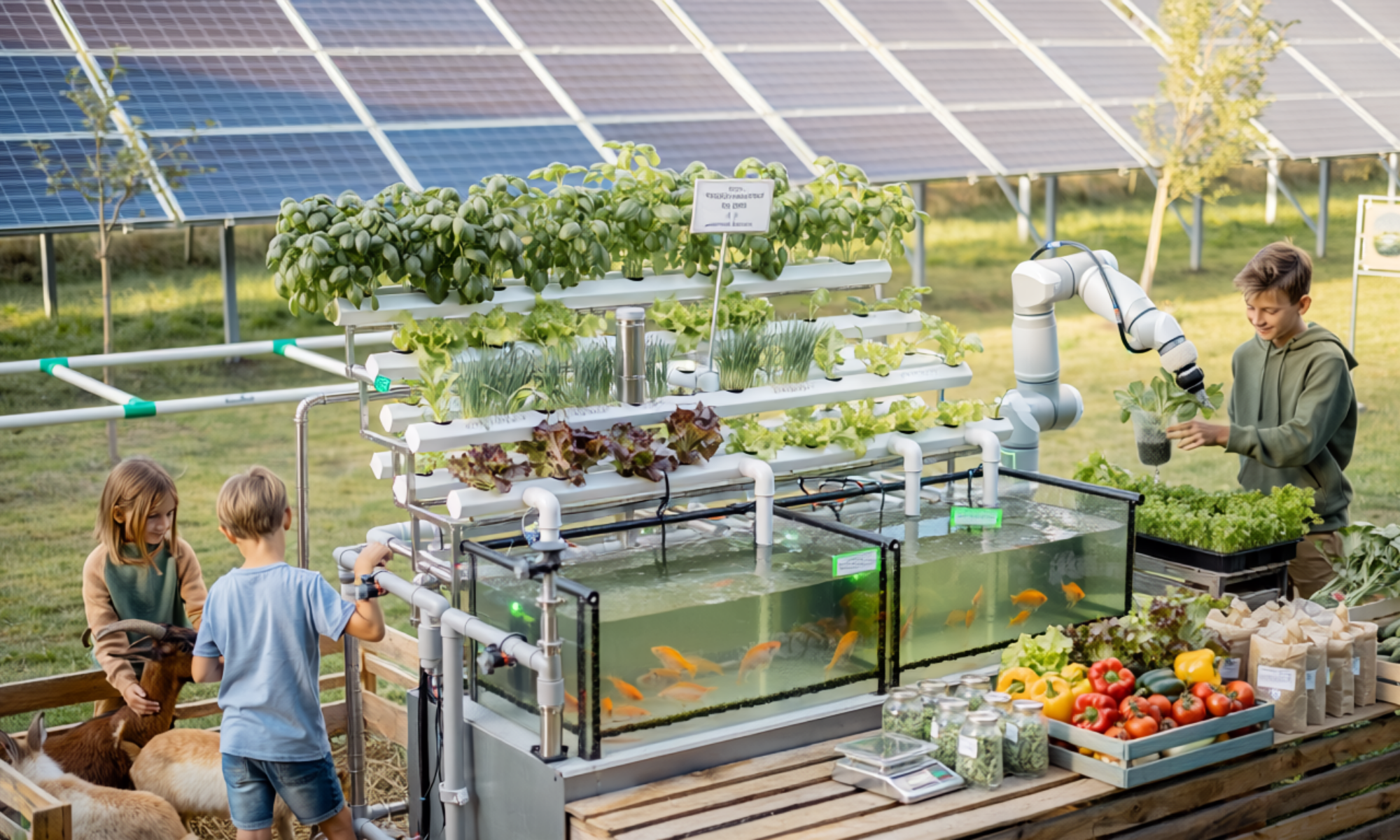

Sensors and controllers turn the aquaponics container into a self‑aware micro‑farm, and vending machines—wired into the same data and AI layer—become smart, cold‑chain endpoints that sell exactly what the container can grow, with minimal waste and minimal human babysitting.
These are the sensors that commercial and educational systems rely on most consistently. They map directly to the biological needs of fish, bacteria, and plants.
Water chemistry sensors
- pH sensor — Tracks acidity/alkalinity, critical for fish health and nutrient availability.
- Electrical Conductivity (EC) / Total Dissolved Solids (TDS) — Measures nutrient concentration; useful for diagnosing imbalances.
- Ammonia, Nitrite, Nitrate sensors — High ammonia/nitrite harms fish; nitrate indicates plant nutrient availability.
- Dissolved Oxygen (DO) probe — Ensures fish and nitrifying bacteria have enough oxygen; low DO is a common failure point.
Environmental sensors
- Water temperature probe — Fish metabolism and plant uptake depend on stable temperature.
- Air temperature & humidity sensors — Important for grow beds, transpiration, and preventing mold.
- Light sensors (PAR or lux) — Useful for LED‑based systems or container farms.
Flow and mechanical sensors
- Water flow sensors — Detect pump failures or clogged pipes.
- Water level sensors — Prevent dry‑running pumps and maintain sump stability.
- Leak detection sensors — Especially important in containerized systems.
Controllers commonly used in aquaponics
Controllers take sensor data and automate actions like dosing, pumping, and lighting. Automation is widely recommended because aquaponics requires constant attention and small deviations can cause system failure .
Microcontroller‑based systems
- Arduino — Good for DIY systems; supports pH, EC, DO, temp, and flow sensors.
- ESP32 / ESP8266 — Adds Wi‑Fi/Bluetooth for cloud dashboards; ideal for container deployments.
- Raspberry Pi — More powerful; can run full dashboards, AI models, and camera analytics.
Dosing and actuation controllers
- Peristaltic pump controllers — For pH up/down, mineral supplementation, or iron chelate dosing.
- Relay/SSR boards — Control pumps, aerators, heaters, and lighting.
- PID temperature controllers — Maintain water temperature within tight tolerances.
Automation guides emphasize that controllers reduce manual labor and maintain ideal conditions with minimal intervention, which is especially important in containerized systems where uptime matters .
Sensor interface and data monitoring
A sensor is only useful if its data is captured, logged, and acted upon. The interface layer is where AI, dashboards, and alerts live.
Hardware interfaces
- I²C / UART / RS‑485 — Common protocols for pH, EC, DO, and industrial sensors.
- Analog inputs (0–5V or 4–20mA) — Used for temperature probes, DO sensors, and industrial water sensors.
Software interfaces
- Local dashboards — Grafana, Home Assistant
- Cloud dashboards — AWS IoT, Azure IoT,
- AI/ML layers — Predictive models for pH drift, ammonia spikes, pump failure detection, or feeding optimization.
Vending machine sensors:
- Internal temperature (per zone/shelf)
- Door open/close, power status
- Weight or optical sensors per slot (to confirm stock)
- Optional: product age tags (RFID/QR + database timestamps)
- Vending controller:
- Embedded board (often already present) + a telemetry module (4G/LTE or Wi‑Fi)
- Interface via MDB, DEX, or vendor API to read:
- Current inventory
- Sales events
- Fault codes (jam, temp fault, power loss)
- Shared data model with the container:
- Container publishes available harvest (SKUs, quantities, best‑by dates)
- Vending machines publish real‑time sales + remaining inventory
- AI service in the middle:
- Forecast demand per machine
- Generate pick‑lists and routes for restocking from the container
- Match oldest harvest → fastest‑moving machines to minimize waste
Automation guides highlight that real‑time data and alerts are essential for preventing system failures and optimizing yields .